.svg.png)

9TH KIPPRA ANNUAL REGIONAL CONFERENCE OPENS WITH RENEWED PUSH FOR INCLUSIVE ECONOMIC TRANSFORMATION THROUGH VALUE CHAINS
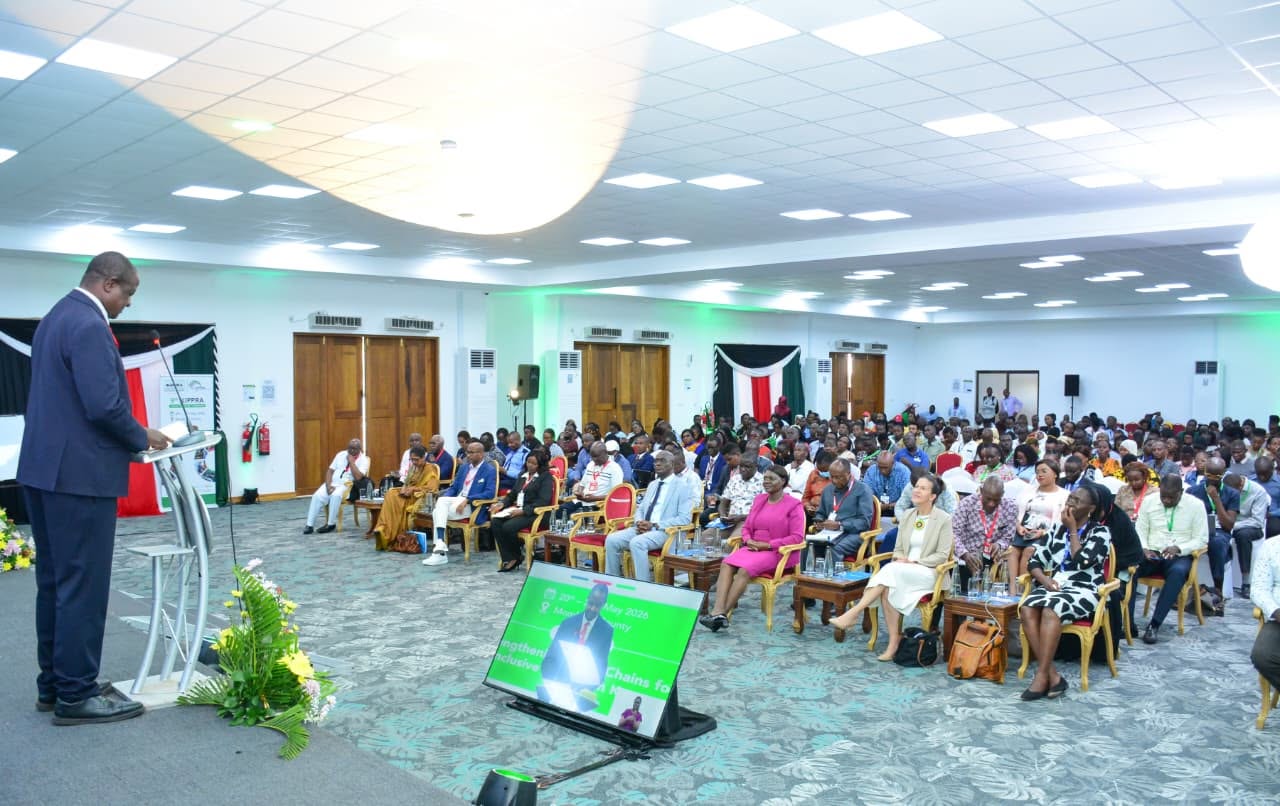
The Principal Secretary for the State Department for Children's Services FCPA Carren Achieng Ageng'o today officially opened the 9th KIPPRA Annual Regional Conference at a Mombasa hotel.
The PS called for stronger collaboration and deliberate policy action to accelerate Kenya’s economic transformation through strengthened value chains, emphasizing that inclusive and resilient growth will depend on how effectively the country generates, retains, and distributes wealth across the economy.
Speaking during the official opening, the PS described the conference as an important platform for policy dialogue, research dissemination, and collaboration on matters of economic transformation.
In addition, she commended KIPPRA for consistently convening the forum and contributing to evidence-based policy and national development initiatives.
Held under the theme “Strengthening Value Chains for Inclusive Growth in Kenya,” the conference comes at a critical time when the country is seeking sustainable solutions to boost productivity, create jobs, improve competitiveness, and foster shared prosperity across sectors and regions, said PS Ageng'o.
She noted that the Government’s Bottom-Up Economic Transformation Agenda (BETA) is anchored on strengthening value chains across key sectors including agriculture, manufacturing, the digital economy, the blue economy, and the creative industry.
In his remarks, for Economic Planning Principal Secretary, Bonface Makokha underscored the critical need to deepen and strengthen Kenya’s economic value chains to ensure growth is faster, more inclusive, and resilient.
He noted that value chains determine how wealth is generated and shared across the economy, adding that efficient systems enhance productivity and generate widespread employment opportunities, while fragmented systems trap local producers, farmers, informal traders, and micro-enterprises in low-income and low-productivity cycles.
The PS stated that the conference theme aligns closely with the Government’s Fourth Medium Term Plan (MTP IV), which seeks to drive structural transformation by empowering citizens at the base of the economy and strengthening economic participation across sectors.
Makokha highlighted Kenya’s strong potential for value-chain-led transformation through its diversified portfolio of high-potential sectors, including agriculture, the blue economy, manufacturing industries, and the rapidly expanding digital ecosystem. He further pointed to Kenya’s globally recognized green energy advantage, noting that over 90 percent of the country’s electricity grid is powered by renewable energy sources.
To successfully strengthen Kenya’s value chains, PS Makokha outlined six strategic priorities: boosting productivity, maximizing value capture, reducing the cost of doing business, mobilizing enterprise financing, investing heavily in human capital, and ensuring the inclusion of women and youth in economic development initiatives.
In addition Dr. Makokha also noted that the State Department for Economic Planning is actively integrating value chain analysis into county planning frameworks to support evidence-based and localized development planning.
Moreover, citizen engagement initiatives such as Gumzo la Uchumi Mashinani were highlighted as important platforms for democratizing public policy by ensuring that the lived experiences, ideas, and innovations of ordinary citizens and young people help shape policy implementation and national development priorities.
The conference which brings together policymakers, researchers, private sector leaders, and development partners continues to explore practical strategies for strengthening Kenya’s value chains and advancing long-term, inclusive, and sustainable economic growth.
In attendace were: Senator David Wakoli, Chair, Standing Committee on Agriculture, Livestock and Fisheries KIPPRA Board led by the Chair, Prof. Paul Wachana and Masini Ichwara, Director General, State Department for Economic Planning among others.